Chapter 4 · The Mill
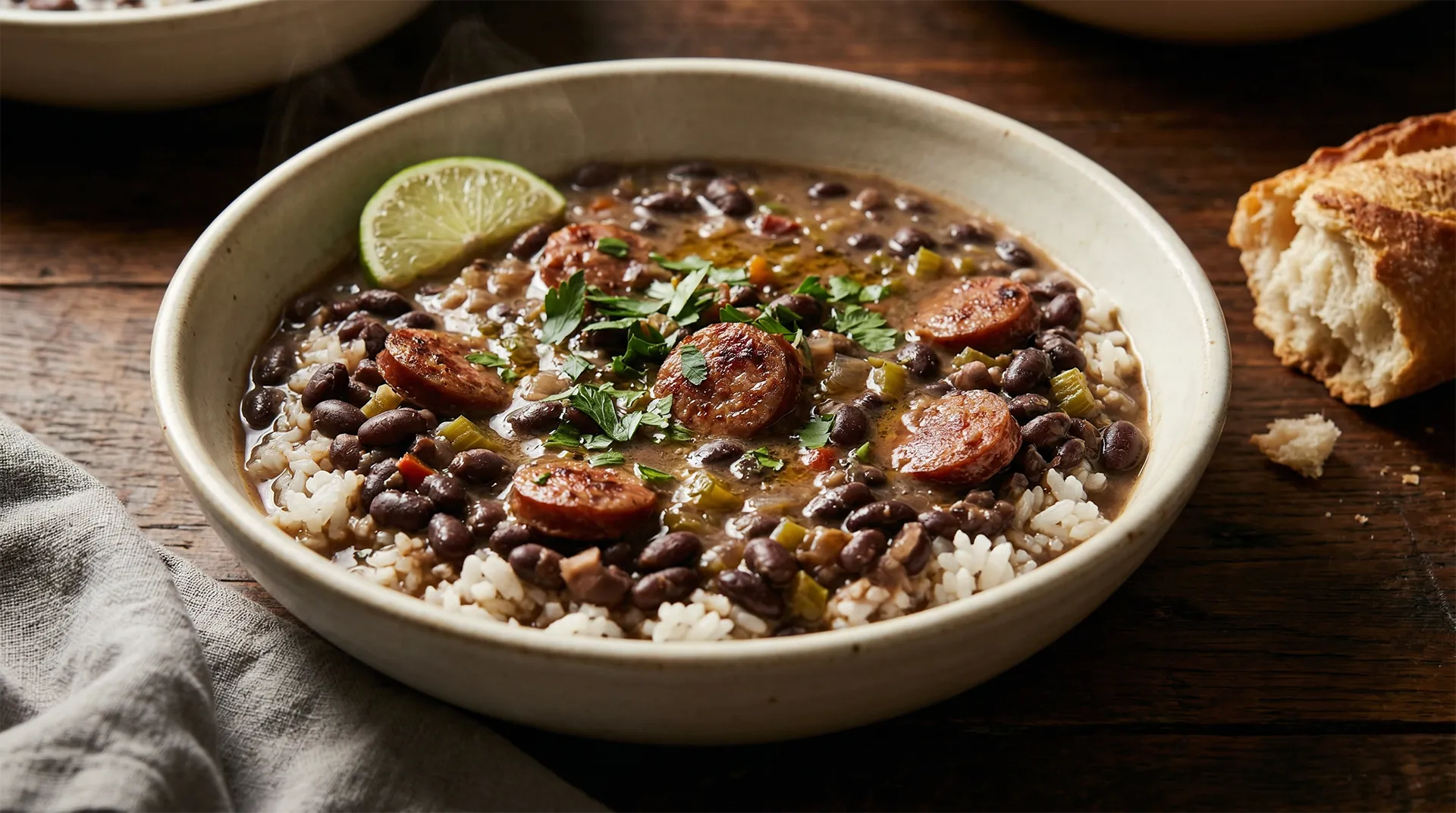
The Companion Louisiana-Style Black Beans & Rice
A smoky, pork-forward black bean stew over seasoned sushi rice, designed as a side-by-side companion to “The Competition Red” Texas-Style Chili.
Yield: Approx. 3 quarts (16–20 side portions) | Prep: 20 min (plus overnight soak) | Cook: 2.5 hr | Total: 3 hr (plus overnight soak)
Headnote
This dish exists to solve a diplomatic problem: your Competition Red is a purist, no-bean Texas chili — but half the crowd wants beans. Rather than compromise the chili, we built a companion that stands on its own. Louisiana-style preparation gives the beans a creamy, stew-like body by intentionally breaking down a portion of them during the simmer. Andouille sausage and a ham hock provide smoky pork depth that complements the all-beef chili next to it in the bowl. Sushi rice adds a slightly sticky, vinegar-kissed base that ties the two dishes together. Served side-by-side, the diner controls every bite.
Teaching Idea: Flavor Bridging. By echoing key ingredients from the main dish in the companion (cumin, ACV), we create cohesion across the bowl. The diner perceives a unified experience rather than two unrelated items. Meanwhile, the pork and smoke in the beans provide contrast — complementary, not competing.
Ingredients
The Rice
- 400 g (2 cups) sushi rice
- 480 ml (2 cups) water
- 30 ml (2 tbsp) rice vinegar
- 10 g (2 tsp) granulated sugar
- 5 g (1 tsp) Diamond Crystal kosher salt
The Proteins
- 225 g (½ lb) andouille sausage, sliced into half-moons
- 1 smoked ham hock
The Beans
- 450 g (1 lb) dried black beans, soaked overnight, drained and rinsed
- 1.2 L (5 cups) low-sodium chicken stock
- 1 medium yellow onion, finely diced
- 2 stalks celery, finely diced
- 1 small green bell pepper, finely diced
- 4 cloves garlic, minced
- 10 g (1 tbsp) ground cumin
- 2 bay leaves
- 15 ml (1 tbsp) apple cider vinegar
- Juice of 1 lime
- Zest of 1 lime
- Diamond Crystal kosher salt, to taste
- Fresh cracked black pepper, to taste
Mise en Place
- Prep Proteins: Slice andouille into half-moons. Rinse ham hock.
- Prep Beans: Soak 450 g (1 lb) dried black beans overnight in cold water. Drain and rinse before starting.
- Prep Aromatics: Finely dice onion, celery, and bell pepper (the Louisiana holy trinity); mince garlic.
- Prep Rice: Rinse sushi rice until water runs clear. Prepare seasoning vinegar mixture.
- Station Setup: Measure cumin, ACV, chicken stock, and lime.
Method
Phase 1: Brown the Andouille. Heat a heavy-bottomed pot or Dutch oven over medium-high heat. Add andouille slices in a single layer and cook until browned and the fat has rendered, about 3–4 minutes per side. Remove andouille and set aside.
Phase 2: The Aromatic Build. Reduce heat to medium. In the rendered andouille fat, sauté onion, celery, and bell pepper for 6–8 minutes until softened. Add garlic and cook for 1 minute. Add cumin and stir constantly for 30 seconds to bloom.
Phase 3: The Long Simmer. Add soaked black beans, chicken stock, ham hock, and bay leaves. Bring to a boil, then reduce to a low simmer. Cook partially covered for 1.5–2 hours, stirring occasionally, until the beans are tender and the ham hock is fall-apart tender.
Phase 4: Build the Body. Once the beans are tender (approximately the 1-hour mark), use the back of a wooden spoon or a potato masher to mash roughly one quarter of the beans against the side of the pot. Stir the mashed beans back into the liquid. This releases starch and creates the thick, creamy consistency characteristic of Louisiana-style beans. Continue simmering for another 30–45 minutes until the liquid has reduced and the consistency is stew-like.
Phase 5: Pull the Pork. Remove the ham hock and bay leaves. Once the hock is cool enough to handle, pull the meat from the bone, discard the skin, fat, and bone, and chop or shred the meat. Return the pulled pork and the browned andouille to the pot. Stir to combine and simmer for an additional 5 minutes to bring everything back to temperature.
Phase 6: The Acid Finish. Remove from heat. Stir in apple cider vinegar and lime juice. Add lime zest. Taste and adjust with salt and pepper. The consistency should be stew-like — thick enough to hold its shape on a plate next to the chili, but loose enough to spoon. If too thick, add a small splash of stock. If too thin, simmer uncovered for a few more minutes before adding the acid.
Phase 7: The Rice. (Start this phase while the beans are in their final simmer — they need no attention.) Rinse the sushi rice under cold water until the water runs clear. Combine rice and water in a medium saucepan. Bring to a boil, reduce heat to the lowest setting, cover tightly, and cook for 18 minutes. Remove from heat and let stand, covered, for 10 minutes. While the rice rests, combine rice vinegar, sugar, and salt in a small bowl and stir until dissolved. Transfer rice to a wide bowl or sheet pan. Drizzle the vinegar mixture over the rice and fold gently with a rice paddle or spatula — do not stir aggressively or the rice will become gummy. Fan the rice as you fold to help it cool slightly and develop a glossy sheen.
Phase 8: Combine and Hold. Fold the seasoned rice into the bean stew, or serve the rice as a base with the beans ladled over top — either method works. Once combined, hold over the lowest heat and stir gently as needed.
Service
Serve side-by-side with the Competition Red in a bowl or divided plate. Spoon the beans and rice on one side, ladle the chili on the other. The diner controls the ratio of every bite — pure chili, pure beans and rice, or a drag across both.
Suggested table sign: “Texas Red — served pure, or side-by-side with smoky black beans & rice.”
Chef’s Notes
- Dried Beans vs. Canned: Dried beans soaked overnight absorb the pork smoke and stock flavors as they cook, seasoning from the inside out. They also release starch more gradually, building a naturally creamy body. Canned beans can be substituted in a pinch (two 15 oz cans, drained and rinsed; reduce stock to 720 ml/3 cups; reduce Phase 3 simmer to 1 hour), but you will lose depth of flavor and texture.
- Flavor Bridge: The cumin and ACV intentionally echo the Competition Red. The pork and smoke in the beans provide deliberate contrast. Together, the two dishes read as a composed bowl, not a chili with a random side.
- Lime vs. The Main Pot: Lime was kept out of the chili to preserve the purity of the ACV finish. On the beans, lime adds a bright contrast that plays against the chili’s deep umami. The two acid profiles complement rather than compete.
- The Holy Trinity: Onion, celery, and bell pepper are the Louisiana aromatic base, distinct from the chili’s onion-and-poblano build. This gives the companion dish its own regional identity.
- Sushi Rice: The subtle vinegar seasoning in sushi rice echoes the ACV in both the chili and the beans. Its sticky texture holds together under the bean stew and stands up next to the heavy chili without turning to mush.
- Make-Ahead: Start your bean soak the same night you put the chili into its Cold-Cure — zero extra effort. The beans improve overnight after cooking, just like the chili. Cook them the day before if possible. The rice is best made day-of. Reheat the beans gently with a splash of stock — they will thicken considerably as they cool. Reheat the rice in a covered pot over low heat with a few drops of water.
- Scaling: This recipe serves 16–20 as a side portion. For a bar cook-off, assume about half your crowd will want the beans and rice. Scale accordingly.
Glossary
- Mashing: The controlled partial destruction of beans during simmering to release starch and create a thickened stew-like consistency.
- Bloom: The process of heating spices, such as cumin, in oil to release their volatile aromatic compounds and intensify their flavor.
- Rice Vinegar: A seasoned vinegar, typically containing rice vinegar, sugar, and salt, used to flavor and adjust the acidity of sushi rice.
- Louisiana Holy Trinity: A foundational mirepoix of diced onion, celery, and bell pepper, commonly used in Louisiana Creole and Cajun cuisine.
- Acid Finish: The final addition of acidic ingredients, like apple cider vinegar and lime juice, to balance the flavors and brighten the dish.
- Starch Release: The enzymatic breakdown of bean cell walls during prolonged simmering, resulting in the release of soluble starches that thicken the liquid.
- Mise en Place: The French culinary term for “everything in its place,” referring to the preparation of ingredients before beginning to cook.