Chapter 6 · The Poulterer
Nashville Hot Chicken (The Weissman Method)
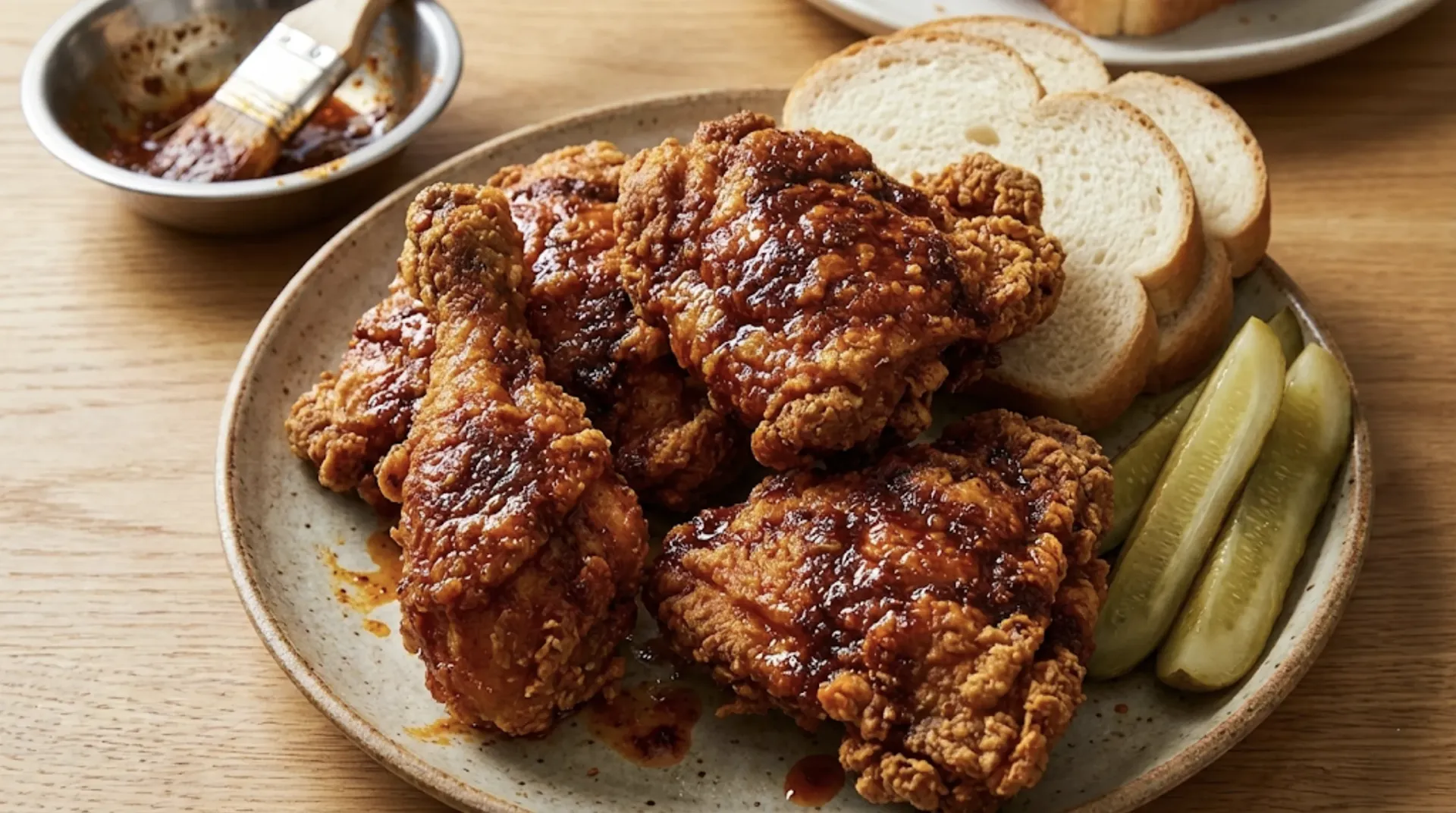
Deep-fried poultry featuring a “craggy” buttermilk crust and a lipophilic blooming spice glaze.
Yield: 4 Leg Quarters (8 pieces) | Prep: 45 min | Inactive: 4–24 hr | Cook: 20 min | Total: ~5–25 hr
Headnote
This technique relies on the “Wet-Dry-Wet” dredging system to maximize surface area. By drizzling a small amount of the liquid binder into the dry flour before dredging, we create artificial “craggy bits”—clusters of crunchy batter that adhere to the chicken. The heat comes not from the breading, but from a post-fry suspension of spices bloomed in the hot cooking oil. Teaching Idea: The Dry Brine. Unlike wet brining, which dilutes flavor with water, salting the meat directly (dry brining) uses osmotic pressure to draw moisture out, dissolve the salt, and reabsorb the concentrated brine into the muscle. This denatures the proteins for juiciness without waterlogging the meat.
Ingredients
The Poultry & Cure
- 4 Whole Chicken Leg Quarters (separated into 8 pieces)
- 12 g (1 tbsp) Diamond Crystal Kosher Salt (for brining)
The Wet Binder
- 480 g (2 cups) Buttermilk
- 2 Large Eggs
- 60 ml (¼ cup) Pickle Juice (Dill)
- 30 ml (2 tbsp) Hot Sauce (Vinegar-based, like Crystal or Tabasco)
- 15 ml (1 tbsp) Soy Sauce (or Smoked Shoyu for authenticity)
The Dry Dredge
- 400 g (3 cups) All-Purpose Flour
- 6 g (2 tsp) Diamond Crystal Kosher Salt
- 4 g (1 tsp) Garlic Powder
The Nashville Fire Paste (The Glaze)
- 240 ml (1 cup) Frying Oil (Hot, taken from pot)
- 25 g (3 ½ tbsp) Cayenne Pepper (Standard Heat)
- 25 g (2 tbsp packed) Dark Brown Sugar
- 12 g (2 tbsp) Smoked Paprika
- 8 g (1 tbsp) Garlic Powder
- 4 g (1 tsp) Diamond Crystal Kosher Salt
Mise en Place (Action Checklist)
- Fabricate: Separate the leg quarters into drums and thighs.
- Dry Brine: Salt the chicken at least 4 hours (ideally 24 hours) in advance.
- Station Setup: Organize the Wet Bowl and Dry Bowl side-by-side.
- Glaze Prep: Have the heat-proof metal bowl with the spice mix ready near the fryer.
Method
Phase 1: The Pre-Treatment (Dry Brine) Place the separated chicken pieces on a wire rack over a baking sheet. Sprinkle evenly with the 12 g Salt. Refrigerate uncovered for 4 to 24 hours. Why: This dries the skin surface for better crisping while chemically modifying the muscle fibers to retain water during the high heat of frying.
Phase 2: The Station Build The Wet: In a large bowl, whisk the Buttermilk, Eggs, Pickle Juice, Hot Sauce, and Soy Sauce until homogenous. The Dry: In a wide, shallow container, whisk the Flour, Salt, and Garlic Powder. The Crag: Drizzle 30 ml (2 tbsp) of the Wet Binder into the Dry Dredge. Rub the flour between your fingertips to create small, shaggy clumps. Sensory Cue: The flour should look like coarse sand with pea-sized lumps. These clumps will become the super-crunchy exterior bits.
Phase 3: The Dredge Dip a piece of chicken into the Wet Binder to coat fully. Lift and let excess drip off. Transfer to the Dry Dredge. Bury the chicken in the flour, pressing firmly to adhere the “craggy bits” to the skin. Shake off excess flour violently (you want a thin, textured coating, not a thick, doughy sweater). Place on a clean wire rack. Repeat for all pieces.
Phase 4: The Fry In a Dutch oven or heavy pot, heat the frying oil to 350°F/175°C. Working in batches (do not crowd the pot), carefully lower the chicken into the hot oil. Fry for 10–12 minutes, flipping occasionally. Target: Internal temperature of 165°F/74°C and a deep, golden-brown crust. Transfer fried chicken to a wire rack to drain. Critical: Maintain oil temperature above 320°F/160°C during the fry to prevent greasiness.
Phase 5: The Bloom & Glaze Allow the fried chicken to rest on a rack. During this resting period, combine the Cayenne, Brown Sugar, Paprika, Garlic Powder, and Salt in your heat-proof metal bowl. Ladle 240 ml (1 cup) of the hot frying oil directly onto the spices. Whisk furiously to dissolve the sugar (The Bloom). Application: The paste must be used immediately, before it cools. Brush it generously over every inch of the rested chicken. Serve immediately with pickles and white bread.
Variations
- The “Shoyu” Substitution: The original methodology specifies Matsutake Shoyu, a premium soy sauce infused with pine mushrooms. This ingredient introduces two critical variables: deep earthiness (mushroom umami) and a subtle smokiness.
Chef’s Notes
- The Heat Scale: 25 g of Cayenne is “Standard Hot” (approachable but spicy). For “Nashville Authentic” (painful), increase Cayenne to 45 g.
- The Soy Variable: The addition of Soy Sauce (specifically Matsutake Shoyu in the original Weissman method) adds a layer of glutamates (Umami) that savory-anchors the heat. Do not skip this; it distinguishes professional seasoning from home cooking.
- Double Dredge: For an extra-thick crust, dip the chicken Wet -> Dry -> Wet -> Dry. Warning: This requires precise oil temperature control to ensure the coating cooks through before burning.
- The Chemistry Hack: To replicate this profile without the expense, combine 15 ml (1 tbsp) standard Soy Sauce with 0.5 g (1 generous pinch) of MSG (to mimic the fungal savory notes) and 1 drop of Liquid Smoke or a pinch of Smoked Paprika. This reassembles the flavor profile using standard pantry isolates.
Glossary
- Dry Brine: A salting technique utilizing osmotic pressure to draw moisture from the meat, concentrating flavor and promoting juiciness.
- Wet-Dry-Wet Dredge: A multi-stage coating process employing a liquid binder to create a textured, “craggy” batter for enhanced crisping.
- Bloom: The process of dissolving sugar in hot oil, releasing volatile aromatic compounds and intensifying flavor.
- Sensory Cue: A descriptive term referring to the desired textural appearance of the flour coating – coarse sand with pea-sized lumps.
- Matsutake Shoyu: A specific type of soy sauce (typically with mushroom notes) used in the original Weissman method to enhance umami.
- Craggy: A textural descriptor referring to the irregular, shaggy appearance of the fried chicken’s coating.
- Osmotic Pressure: The movement of solvent molecules (like water) across a semipermeable membrane, utilized in dry brining to draw moisture from the meat.
- Glutamates (Umami): A class of amino acids responsible for the savory, meaty flavor profile, particularly when present in concentrated form.