Chapter 7 · The Butcher
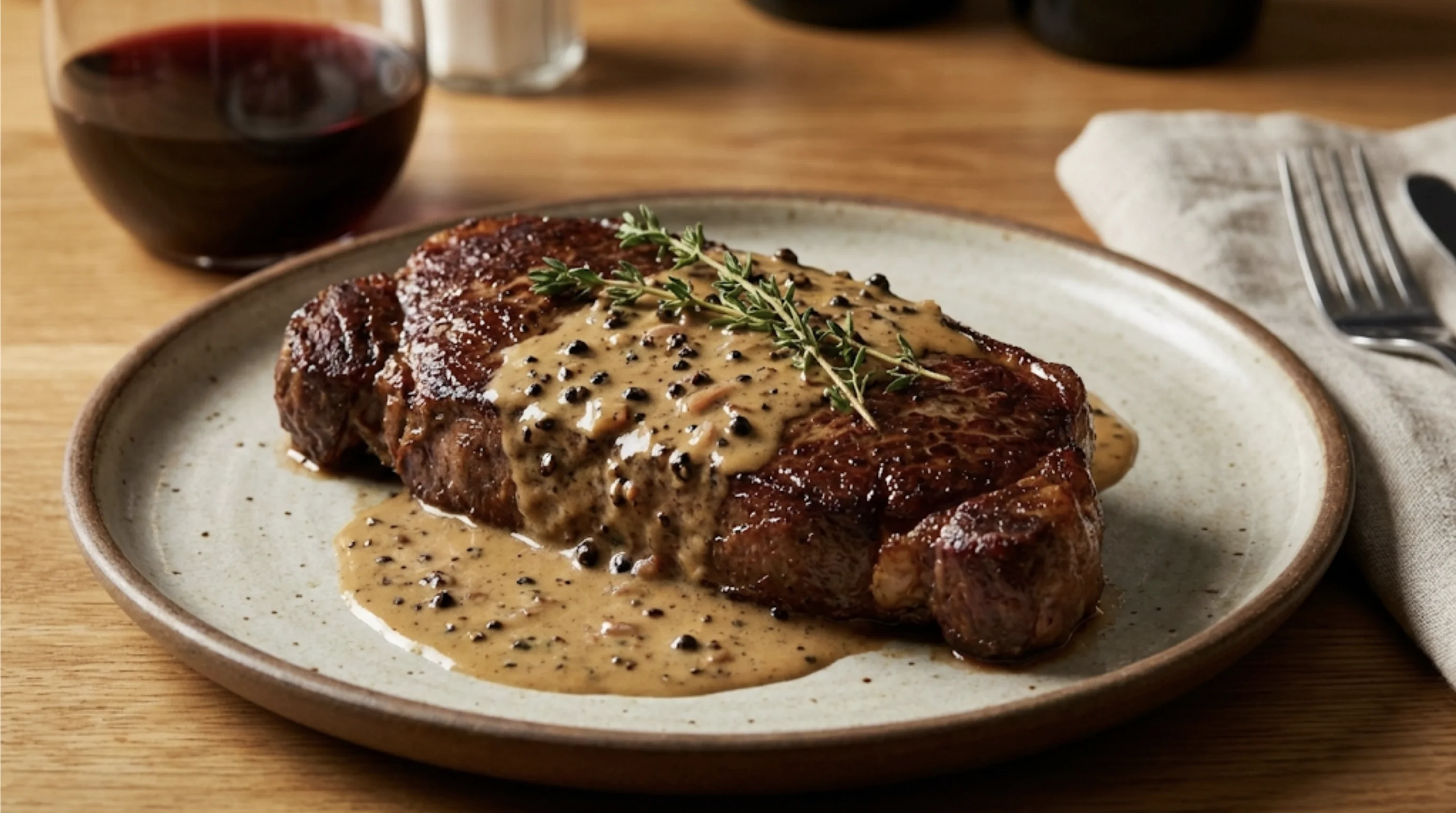
Steak au Poivre (Bistro Style)
Classic pan-seared steak finished with a cognac and cream peppercorn emulsion.
Yield: 2 servings | Prep: 15 min | Inactive: 45 min | Cook: 20 min
Headnote
The secret to a perfect Au Poivre is temperature management. While traditional recipes coat the raw steak in pepper, high searing temperatures often burn the spices, creating acrid bitterness. In this method, we sear the meat first to maximize the Maillard reaction, then bloom the cracked peppercorns in the hot fat and fond to extract the floral, spicy piperine oils without burning them.
Ingredients
The Protein
- 2 (340 g / 12 oz) New York Strip or Ribeye Steaks (boneless)
- 12 g (1 tbsp) Diamond Crystal Kosher Salt
- 30 ml (2 tbsp) Grapeseed or Avocado Oil (High smoke point)
The Sauce
- 10 g (1 tbsp) Whole Black Peppercorns
- 30 g (2 tbsp) Shallot, minced
- 60 ml (¼ cup) Cognac or Brandy
- 120 ml (½ cup) Beef Stock (unsalted or low sodium)
- 60 ml (¼ cup) Heavy Cream
- 28 g (2 tbsp) Unsalted Butter, cold and cubed
- 1 Sprig Thyme (optional)
Mise en Place (Action Checklist)
- Dry the surface: Pat steaks thoroughly dry with paper towels.
- Crack the pepper: Use a mortar and pestle or the bottom of a heavy skillet to crush peppercorns. Aim for a coarse “rubble,” not a fine powder.
- Pre-measure liquids: Measure the Cognac and stock into separate vessels. (Safety Note: Never pour alcohol directly from the bottle into a hot pan).
- Mince the aromatics: Finely mince the shallots.
Method
Phase 1: The Pre-Salt (Diffusion) Place the steaks on a wire rack set over a baking sheet. Season all sides generously with the Diamond Crystal Kosher Salt. Let stand at room temperature for 45 minutes. Why: This allows the salt to draw out moisture (osmosis) and then re-absorb into the muscle fibers (diffusion), seasoning the meat deeply and drying the surface for a better sear.
Phase 2: The Sear (Maillard Reaction) Preheat a stainless steel or cast-iron skillet over high heat until wisps of smoke appear. Add the oil and swirl to coat. Carefully lay the steaks away from you to avoid splatter. Sear undisturbed for 3–4 minutes until a deep mahogany crust forms. Flip and sear the other side for 3 minutes. Sensory Cue: The meat should release easily from the pan. If it sticks, the crust has not finished forming.
Phase 3: The Rest Remove steaks from the pan when they reach an internal temperature of 125°F/52°C (for Medium-Rare). Transfer to a warm plate and loosely tent with foil. Why: Resting allows the muscle fibers to relax and reabsorb internal juices. The temperature will carry over 5–10 degrees while resting.
Phase 4: The Fond and Bloom Pour off all but 1 tablespoon of fat from the skillet, leaving the browned bits (fond) on the bottom. Return pan to medium heat. Add the crushed peppercorns and shallots. Sauté for 1 minute until fragrant and the shallots are translucent. Why: Blooming the pepper in warm fat extracts fat-soluble flavor compounds that water-based liquids cannot access.
Phase 5: The Emulsion Remove the pan from the heat (safety first). Pour in the Cognac. Return to heat and carefully ignite with a long match or tilt the pan to catch the gas flame (Flambé). Shake the pan until the flames die down. Add the beef stock and scrape the bottom of the pan with a wooden spoon to release the fond (Deglaze). Increase heat to high and reduce the liquid by half. Stir in the heavy cream and simmer until the sauce thickens enough to coat the back of a spoon (nappé).
Phase 6: The Mount Turn off the heat. Whisk in the cold butter one cube at a time until fully incorporated. Why: Adding cold butter to a hot reduction (monter au beurre) creates a glossy, stable emulsion rather than a greasy separation.
Phase 7: Assembly Taste the sauce and adjust salt if necessary. Plate the rested steaks and spoon the sauce generously over the top. Serve immediately.
Glossary
- Maillard Reaction: A complex chemical reaction between amino acids and reducing sugars that produces browned food with characteristic flavors and aromas.
- Fond: The concentrated, flavorful residue (browned sugars and proteins) deposited on the bottom of a pan during high-heat cooking, forming the base of many sauces.
- Nappé: A French term describing the desired consistency of a sauce – thick enough to coat the back of a spoon, but still fluid enough to pour.
- Monter au Beurre: The technique of incorporating cold, cubed butter into a warm sauce, creating a stable emulsion and enhancing its richness and shine.
- Osmosis: The movement of solvent (in this case, water) across a semi-permeable membrane (the meat’s surface) from a region of high concentration to a region of low concentration.
- Deglaze: The process of dissolving the browned bits (fond) from the bottom of a pan by adding a liquid, typically wine, stock, or brandy, and simmering.