
Chapter 12 · Les Fonds
Crème Pâtissière
The foundational “Mother Custard” of the pastry kitchen, featuring a rich, velvety texture and a clean vanilla profile.
Yield: ~750 g | Prep: 15 min | Inactive: 4 hr | Cook: 10 min | Total: ~4.5 hr
Headnote
Crème Pâtissière (pastry cream) is defined by its use of starch—typically cornstarch—to create a thick, pipeable consistency that is stable at room temperature. A successful pâtissière must be cooked long enough to neutralize specific enzymes while remaining fluid enough to avoid a “rubbery” texture. Teaching Idea: Starch Gelatinization. Egg yolks contain an enzyme called alpha-amylase that can break down starch over time, turning a thick cream into a liquid in the refrigerator. Boiling the mixture for a full minute ensures the cornstarch is fully hydrated and the enzymes are thermally destroyed.
Ingredients
The Enriched Base (Optimized for Composites)
- 242 g (1 cup) whole milk
- 242 g (1 cup) heavy cream
- 100 g (½ cup) granulated sugar
- ½ vanilla bean, split and scraped (or 1 tsp vanilla paste)
- 100 g (2 large) eggs, weighed without shells
- 32 g (¼ cup) cornstarch
- 1 g (¼ tsp) Diamond Crystal kosher salt
- 15 ml (1 tbsp) Grand Marnier or liquor of choice
- 42 g (3 tbsp) unsalted butter, chilled and cubed
Mise en Place (Action Checklist)
- Split and Scrape: Split the vanilla bean lengthwise and scrape the seeds into the milk/cream mixture.
- Create the Slurry: Whisk the cornstarch and a portion of the cold liquid in a small bowl until completely smooth to prevent clumping.
- Temper the Yolks: Ensure the egg yolks are at room temperature (70°F/21°C) before beginning the tempering process.
- Prep the Cooling Station: Line a small baking sheet with plastic wrap or parchment paper to allow for rapid cooling.
Method
-
Infuse and Scald: In a 3-quart saucepan, combine the milk, heavy cream, sugar, and vanilla bean (seeds and pod). Bring to a simmer over medium-low heat.
-
Build the Emulsion Base: The milk is now warming from Step 1. Whisk the eggs and cornstarch in a small bowl until perfectly smooth and no white streaks remain.
-
Temper the Eggs: Slowly pour roughly 125 ml (½ cup) of the hot milk mixture into the egg mixture while whisking constantly.
Why: This gradually raises the temperature of the eggs, preventing them from scrambling when introduced to the main pot.
-
The Gelatinization Boil: Strain the egg mixture through a fine-mesh strainer back into the saucepan. Return to medium heat and whisk constantly, ensuring you reach the corners of the pan.
Sensory Cue: As soon as the mixture thickens and begins to bubble, cook for exactly 60 seconds while whisking vigorously. The texture will shift from matte to glossy.
-
Finish and Emulsify: Remove from heat and discard the vanilla pod. Whisk in the Grand Marnier, salt, and chilled butter cubes one at a time until the fat is fully incorporated and the cream is silky.
-
Rapid Chill: Pour the hot cream onto the prepared baking sheet and spread thinly. Press a piece of plastic wrap directly onto the surface of the cream.
Why: Surface contact with plastic wrap prevents a “skin” from forming, which would create lumps when the cream is later whisked or piped.
-
Set: Cool at room temperature for 30 minutes, then refrigerate for at least 3–4 hours (or overnight) until completely set.
Variations
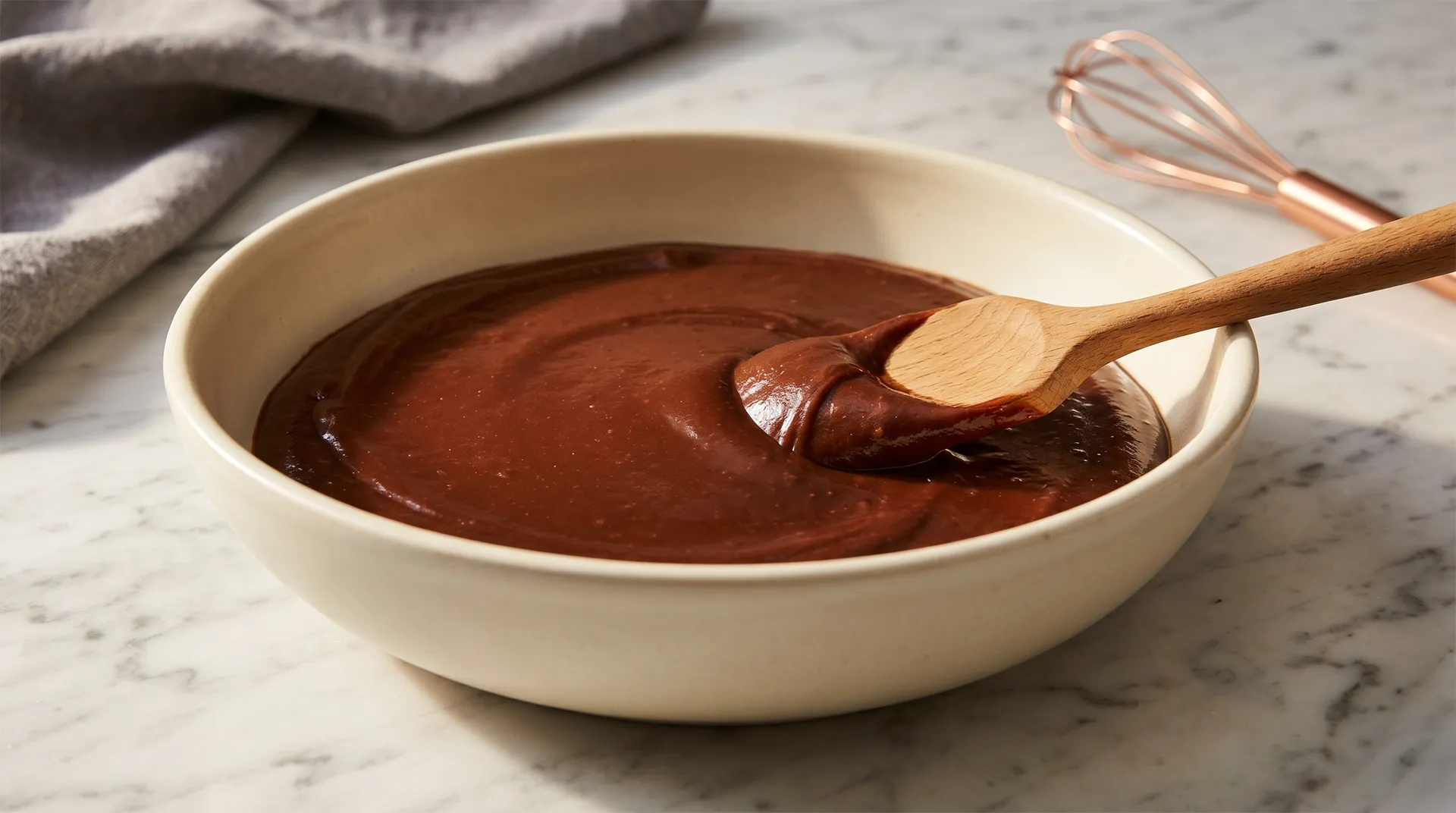
- Chocolate: While the cream is still hot (Step 5), whisk in 100 g of chopped 60% dark chocolate. Omit the butter if the chocolate has a high cocoa butter content to maintain the proper set.
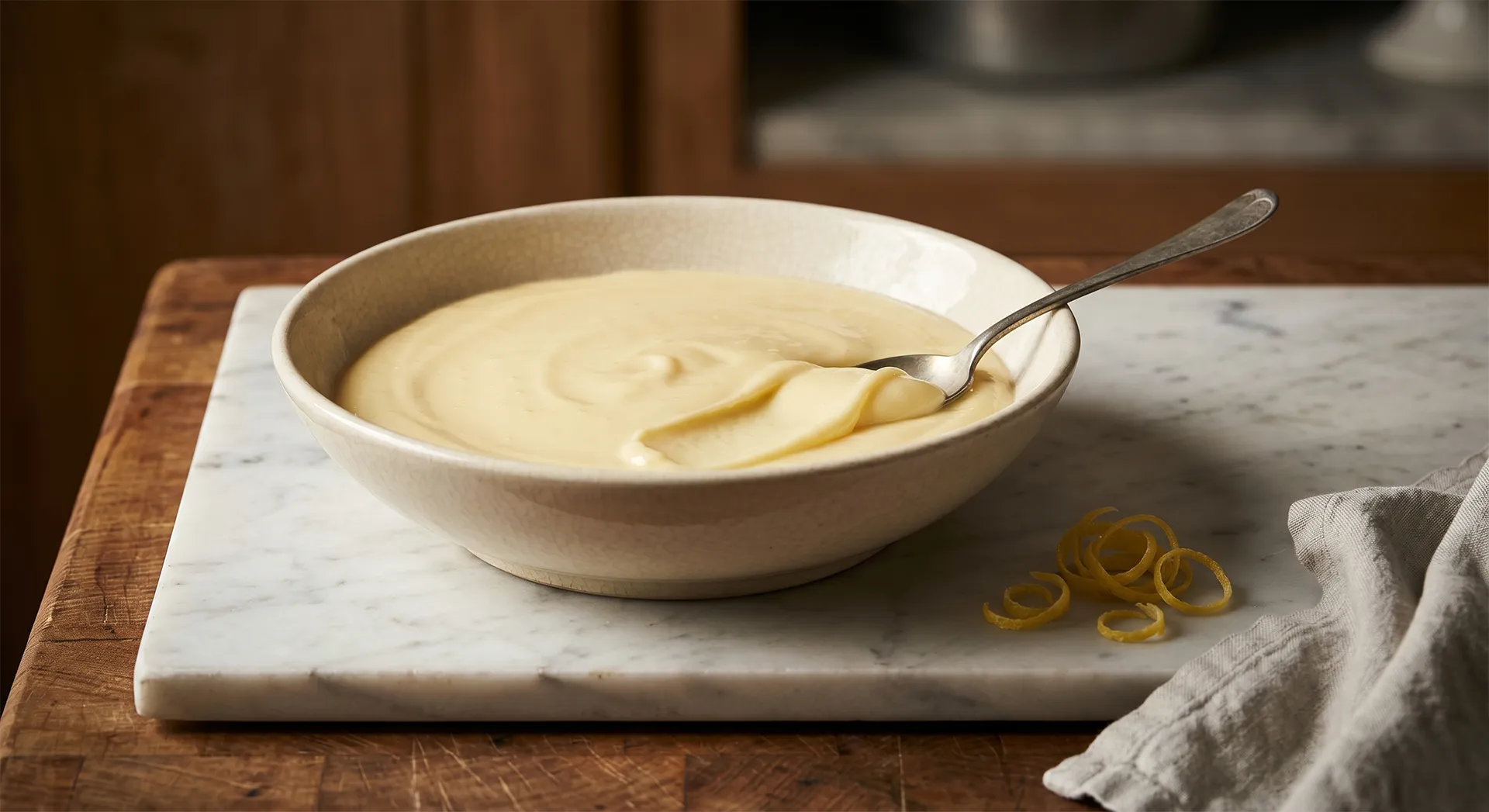
- Lemon: Infuse 8–10 g (zest of 2 medium lemons, zest only) into the milk/cream during Step 1 alongside the vanilla. Strain out with the vanilla pod. Omit the Grand Marnier; instead, whisk in 30 ml (2 tbsp) fresh lemon juice off-heat after the butter (Step 5). Reduce the vanilla to ¼ bean.
Chef’s Notes
- The Standard Base: For a lighter, traditional pastry cream, replace the heavy cream with an equal amount of whole milk. Increase the cornstarch to 45 g for equivalent stability.
- Storage: Pastry cream can be stored for up to 3 days. Before using, always “beat” the chilled cream with a whisk to restore its smooth, pipeable consistency.
Glossary
- Nappé: The consistency where a sauce or custard is thick enough to coat the back of a spoon and hold a line when a finger is drawn through it.
- Syneresis: The “weeping” of liquid from a gel or cream, often caused by improper starch hydration or enzyme interference.
- Tempering: The process of combining two liquids of different temperatures slowly to prevent protein coagulation (scrambling).