Chapter 7 · The Butcher
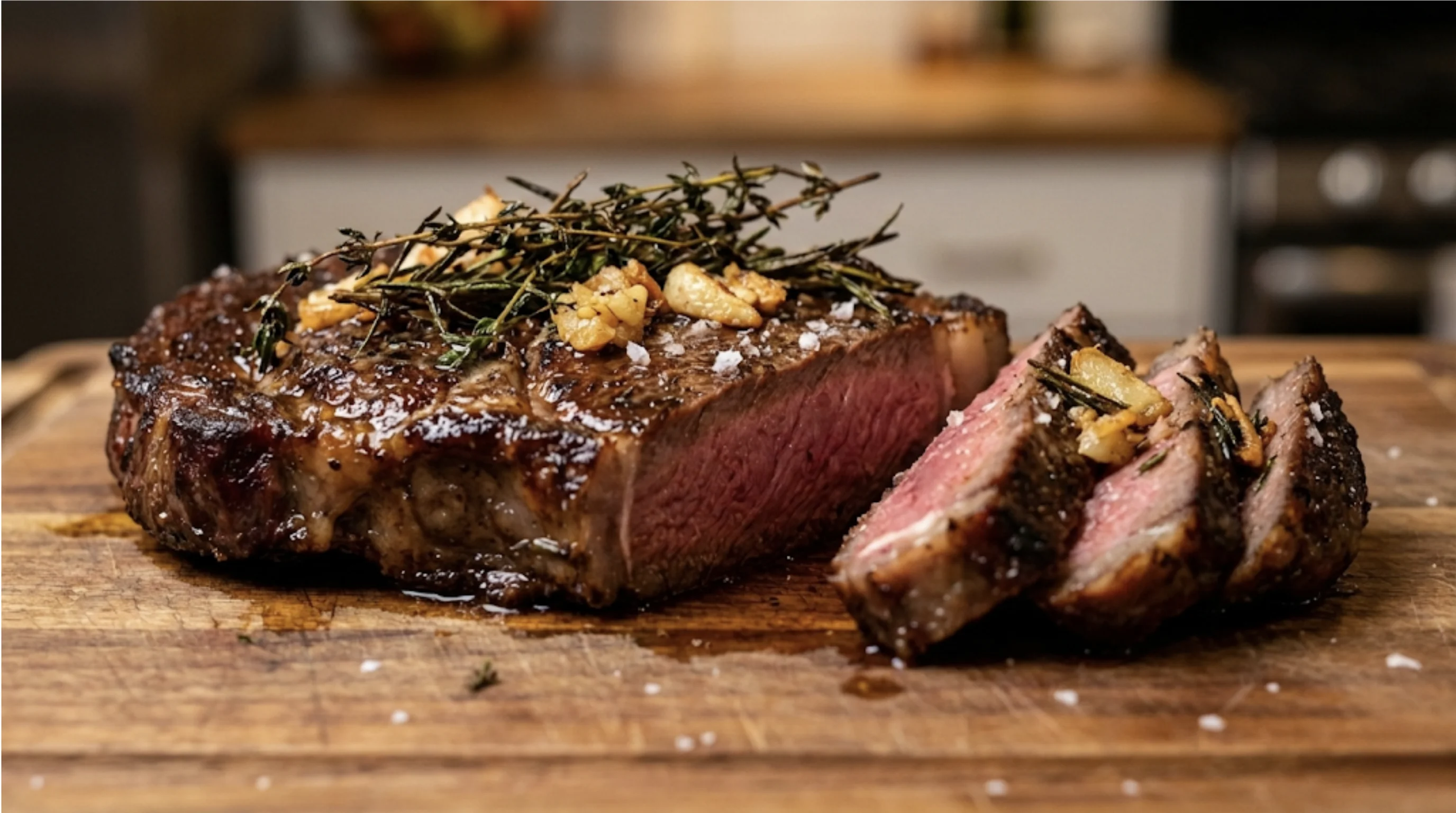
Ribeye with Bone Marrow & Herb Baste
Reverse-seared prime beef finished in rendered marrow lipid
Yield: 2 steaks | Prep: 10 min (plus curing time) | Cook: 45 min | Total: ~55 min (plus curing time)
Headnote
This recipe decouples internal cooking from crust formation using the “Reverse Sear” method, ensuring edge-to-edge evenness. We finish the steak using raw bone marrow instead of butter — because marrow has a higher viscosity and smoke point than dairy solids, it allows for a more aggressive, high-heat baste that carries the volatile oils of the herbs deep into the crust.
Ingredients
The Butcher
- 2 thick-cut Ribeye steaks (approx. 5 cm / 2 inches thick)
- Kosher salt (Diamond Crystal)
The Baste
- 2 center-cut beef marrow bones (approx. 3 inches long)
- 4 cloves garlic, crushed
- 4 sprigs fresh thyme
- 2 sprigs fresh rosemary
- 15 ml (1 tbsp) neutral oil (grapeseed or avocado)
- Flaky sea salt (Maldon), for finishing
Mise en Place (Action Checklist)
- Dry-brine the steaks (minimum 1 hour, ideally overnight).
- Preheat oven to 225°F / 105°C.
- Extract the marrow from the bone pipes (push out raw).
- Dice the raw marrow into 1 cm cubes.
- Crush the garlic cloves (leave skins on).
- Bundle the thyme and rosemary.
Method
Phase 1: Establish Equilibrium. Season steaks liberally with kosher salt on all sides. Place on a wire rack uncovered in the refrigerator.
Why: This utilizes osmotic pressure to draw moisture out, dissolve the salt, and re-absorb it — seasoning the meat deeply while dehydrating the surface for a superior crust.
Phase 2: The Thermal Gradient. Place the steaks (still on the wire rack) into the preheated oven. Roast until the internal temperature reaches 115°F/46°C for medium-rare.
Note: This will take 30–45 minutes depending on thickness. The meat will appear gray and unappealing at this stage — this is expected.
Phase 3: Render and Sear. Remove steaks and let them rest for 5 minutes. Heat a cast-iron skillet over high heat with the neutral oil until smoking. Sear the steaks: 60 seconds on the first side. Flip.
Phase 4: The Marrow Baste. Immediately after flipping, drop the diced raw marrow, garlic, and herbs into the pan. Tilt the pan to pool the rapidly melting fat. Using a large spoon, repeatedly baste the foaming marrow fat over the steaks for 60–90 seconds.
Sensory Cue: The marrow should foam vigorously, and the garlic should turn golden brown. The herbs will fry and become crisp.
Phase 5: Rest and Serve. Remove steaks to a cutting board or warm plate. Pour the remaining marrow fat and crispy herbs over the top. Rest for 5–7 minutes before slicing to allow the juices to redistribute.
Glossary
- Reverse Sear: A two-stage cooking method (low heat first, high heat second) that maximizes edge-to-edge doneness and minimizes the “gray band.”
- Osmotic Pressure: The force that drives the movement of water across semipermeable cell membranes to equalize salt concentration.
- Maillard Reaction: A chemical reaction between amino acids and reducing sugars that gives browned food its distinctive flavor.
- Fat Rendering: The process of melting and separating fat from a food, such as bone marrow, due to heat.
- Aromatics: Fragrant plant materials, such as garlic and herbs, used to enhance the flavor of a dish.
- Sensory Cue: A specific observation or indication related to the desired outcome of a culinary process (e.g., “the marrow should foam vigorously”).
- Equilibrium: A state of balance or stability achieved through controlled adjustments to factors like temperature and time.